
What Is Expressive Art Therapy? Does It Really Work?

I sat in my car outside my fourth therapist's office and realized I had nothing left to say.
I had told the story so many times that it had turned into a script. I could get through the whole thing without feeling anything. My therapist would ask how it made me feel, and I would say "fine," because that was easier than admitting I had gone numb somewhere along the way.
A friend brought up expressive art therapy. I laughed at her. I had not drawn anything since third grade, and I was pretty sure a box of pastels was not going to fix my sleep or my marriage.
But I was tired of talking in circles. So I searched for it at midnight, half hoping it was real.
If you are sitting in that same car, here is what I found.
What Is Expressive Art Therapy?
Expressive art therapy is a form of mental health treatment where a licensed therapist uses creative activities, such as drawing, music, movement, or writing, to help you reach and process feelings. You still talk. You just do not have to lead with words. Therapists often recommend it when someone feels stuck, numb, or unable to describe what is happening inside them. The American Art Therapy Association treats it as a clinical mental health profession with its own graduate training and credentials, not a wellness hobby.
Here are the basics you need to understand it:
A simple definition anyone can follow
Picture regular therapy, then add materials to the room. Your therapist might hand you oil pastels and ask you to show what your anxiety looks like. You make something. Then the two of you look at it together and talk about what came up. The art gives you a starting point when your brain refuses to produce sentences.
Expressive art therapy vs art therapy
Most websites use these terms as if they mean the same thing. They do not. Art therapy usually centers on visual art. Expressive art therapy pulls from several creative forms at once, so a single session might include movement, sound, and drawing. Therapists call this an intermodal approach, and it exists because different feelings surface through different channels.
You do not need any artistic talent
Nobody grades your work. Your therapist watches the process, not the product. Stick figures count. Scribbles count. Plenty of clients throw their drawings away afterward and still get everything they needed from making them.
How Expressive Art Therapy Works
Words come from one part of your brain, and raw emotional memory lives somewhere less verbal. That gap explains why you can describe a painful event calmly and still feel your chest tighten every time someone mentions it. Creative work gives those feelings a different exit route. You use your hands, your body, and your senses, and the material often shows up before you can name it. Therapists then help you connect what appeared on the page to what is happening in your life.
Here is how that plays out in practice:
Why creating reaches feelings words miss
Your therapist may ask you to draw a moment instead of explaining it. Clients regularly notice something in their own drawing that surprises them, like a figure standing far away from everyone else. That surprise becomes the real conversation.
The main creative modes therapists use
Sessions can include drawing and painting, clay and sculpture, music and rhythm, movement, drama and role play, poetry, and journaling. If writing appeals to you more than drawing, our guide to journaling for mental health covers a version you can start on your own tonight.
The process matters more than the picture
Your therapist pays attention to how you work. Do you press hard or barely touch the paper? Do you fill the page or shrink into a corner? Those choices tell a story, and that story becomes the material for the session.
Does Expressive Art Therapy Work? What the Research Shows
Here is the honest answer. Researchers have produced real, measurable evidence that creative arts therapies help with several conditions, and the evidence has grown a lot since 2024. Researchers have also flagged real weaknesses in that same body of work, including small study sizes and a tendency to publish only positive results. Both things stay true at once. Anyone who tells you expressive art therapy cures everything is overselling it, and anyone who calls it a craft activity is ignoring the data.
Here is what the strongest studies currently show:
Evidence for depression and anxiety
A 2025 systematic review and meta-analysis in PubMed Central found that art therapy significantly reduced depression symptoms in children and adolescents, with a moderate to large effect size. A separate 2026 meta-analysis of randomized controlled trials found meaningful anxiety reduction from painting-based interventions, with older adults showing the largest benefit.
Evidence for trauma and PTSD
Trauma carries the strongest support right now. A 2025 systematic review concluded that art therapy works as an effective and acceptable treatment for young people in acute or severe mental health crises, with the heaviest weight of evidence landing on post-traumatic stress. That fits the theory, since trauma memories often resist verbal processing. If you want a direct comparison, read our breakdown of art therapy vs EMDR for trauma.
Where the research is still thin
Independent reviewers have pointed out three limits. Many studies are small. Most report only positive findings, which suggests publication bias. And researchers still cannot fully explain the mechanism behind why it helps. Treat expressive art therapy as promising and useful rather than proven beyond question.
What Actually Happens in a Session
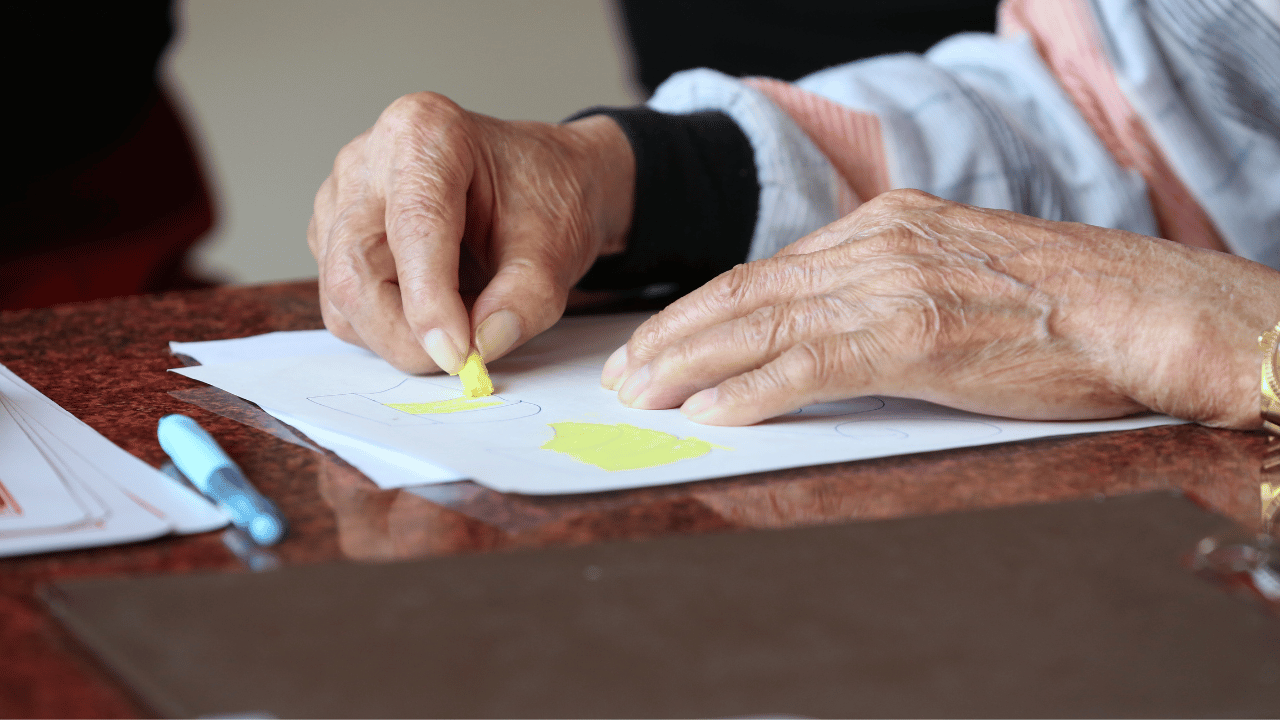
Most people picture something strange, like a therapist analyzing their color choices to reveal hidden secrets. Real sessions look ordinary. You walk in, you sit down, and you talk for a while. At some point your therapist suggests a creative activity connected to whatever you brought that day. You spend part of the hour making something, and you spend the rest talking about it. Sessions usually run 45 to 60 minutes, and nobody rushes you into anything you resist.
Here is what to expect step by step:
Your first appointment
Your first visit looks like any intake. Your therapist asks about your history, your symptoms, your goals, and what you have already tried. You may not touch a single art supply. That session exists to build a plan. Our guide on what happens in your first therapy session walks through the whole thing.
A typical session start to finish
You check in about your week. Your therapist offers a prompt, such as drawing where you feel stress in your body. You work for 10 to 20 minutes. Then you both look at what you made and follow the threads that seem alive.
Individual versus group sessions
Groups cost less and add something individual work cannot, which is watching other people struggle with the same feelings. Individual sessions give you more depth and privacy. Many people do both.
Who Benefits Most, and Who Should Start Somewhere Else
Expressive art therapy fits some people beautifully and fits others poorly, and a good clinician will say so directly. It tends to help people who feel emotionally blocked, people who have talked about their problems until the words lost meaning, and people whose distress lives in their body more than their thoughts. It works less well as a standalone treatment for conditions that need medication, structured protocols, or a higher level of care first.
Here is how to tell where you land:
Signs it is a strong fit for you
Talk therapy has stalled. You go blank when someone asks how you feel. You process things through music, movement, or making rather than analyzing. You have trauma that you cannot narrate without shutting down.
How it works across ages
Children benefit because they often lack the vocabulary for big feelings. Teenagers respond well because creative work feels less like an interrogation. Adults and older adults use it for grief, life transitions, chronic illness, and long-buried trauma.
When you need a different starting point
Active suicidal thinking, severe eating disorders, untreated psychosis, and acute crises all call for a higher level of care first. Expressive work then supports that care instead of replacing it. Medication questions belong with a prescriber, not a paintbrush.
How Much Does Expressive Art Therapy Cost?
Cost catches most people off guard, because the price swings widely depending on your therapist's license and your insurance plan. Private pay sessions generally run between $75 and $250. With in-network insurance, most patients pay a copay somewhere between $10 and $50. Out-of-network patients often pay full price upfront and then get 40 to 80 percent back after meeting a deductible. Group sessions cost far less, frequently around $50.
Here is how to figure out your real number:
What you will likely pay
Ask for the private pay rate and the in-network copay separately. Also ask whether the practice offers sliding scale spots, since many reserve a few. Our therapy cost guide for Boston breaks down local pricing in detail.
Why your therapist's license changes your coverage
Insurers reimburse based on the clinician's license, not the creative technique. A licensed clinical social worker or mental health counselor who uses expressive methods can usually bill insurance. Someone with only an art credential and no clinical license often cannot.
Questions to ask your insurance company
Call the number on your card and ask four things. Do I have outpatient mental health benefits? Is this specific provider in network? What is my copay and my deductible? How many visits does my plan cover each year?
How Long Before You Feel a Difference?
Nobody can promise you a timeline, but patterns exist. Many people notice small shifts within four to six weekly sessions, usually in the form of better sleep, fewer emotional shutdowns, or slightly more room between a trigger and their reaction. Deeper trauma work takes longer, often several months. Progress rarely moves in a straight line, and a hard session does not mean the therapy failed.
Here is what to watch for along the way:
A realistic number of sessions
Focused goals like grief support or anxiety often take 8 to 20 sessions. Complex trauma usually runs longer. Your therapist should set a review point with you rather than leaving it open forever.
How often you should go
Weekly works best at the start, because momentum matters. Once things stabilize, many people move to every other week.
Signs it is working
You describe feelings you could not name before. You react less intensely to old triggers. You dread sessions less. You notice yourself using the tools between appointments.
How to Find a Qualified Expressive Art Therapist
This step protects you, because the title "art therapist" is not protected in every state. Only about 17 states license art therapists directly, so in the rest, qualified clinicians practice under a broader mental health license such as LMHC, LICSW, or LMFT. Massachusetts falls in that second group, which means you should check for a valid clinical license first and specialized creative arts training second.
Here is how to vet someone properly:
Credentials worth looking for
Look for a state clinical license, plus art therapy credentials from the Art Therapy Credentials Board such as ATR or ATR-BC. The ATR-BC requires a master's degree, 1,000 to 1,500 supervised clinical hours, and a national board exam.
Red flags to walk away from
Skip anyone who calls themselves a coach while offering therapy, promises specific outcomes, cannot produce a license number, or refuses to explain their training. Our guide on how to choose the right therapist in Boston covers the full vetting process.
Questions to ask on a consultation call
Ask about their license, their creative arts training, their experience with your specific concern, their fee, and how they measure progress. Any good clinician answers all five without hesitation.
Ready to Try It? We Can Help
At Massachusetts Mind Center in Boston's Back Bay, our team of psychiatrists, psychologists, and licensed therapists builds treatment around what each person actually needs. Some people do best with talk therapy. Some need medication management alongside it. Some respond to creative and expressive approaches when words stop working. We help you figure out which combination fits, and we adjust as you go.
We offer both in-person and virtual appointments, including evenings, and we work with most major commercial insurance plans including Blue Cross Blue Shield, Aetna, Cigna, United Behavioral Health, Optum, and Tufts.
If you are looking for a therapist and you are tired of repeating the same story without feeling anything change, reach out. Call us or request an appointment through our site, and we will help you find the right starting point.
Frequently Asked Questions
Is expressive art therapy the same thing as art therapy?
No. Art therapy focuses mainly on visual art. Expressive art therapy combines several creative forms, such as music, movement, drama, and writing, within the same treatment.
Do I need to be good at art?
No. Your therapist pays attention to your process, not your skill. Most clients have no art background at all.
Does insurance cover expressive art therapy?
Often yes, when a licensed clinician provides it. Coverage depends on the therapist's license and your specific plan, so call your insurer before your first appointment.
How many sessions will I need?
Most people notice early changes within four to six weekly sessions. Focused goals often take 8 to 20 sessions, while complex trauma work usually takes longer.
Can it replace medication or CBT?
It works best alongside other treatments rather than instead of them. Talk to a prescriber before changing any medication.
Does expressive art therapy work over video?
Yes, many therapists deliver it virtually. You gather simple supplies at home and work through prompts together on screen.