
Meditation for Mind Body Connection: When You Feel Disconnected From Your Own Body
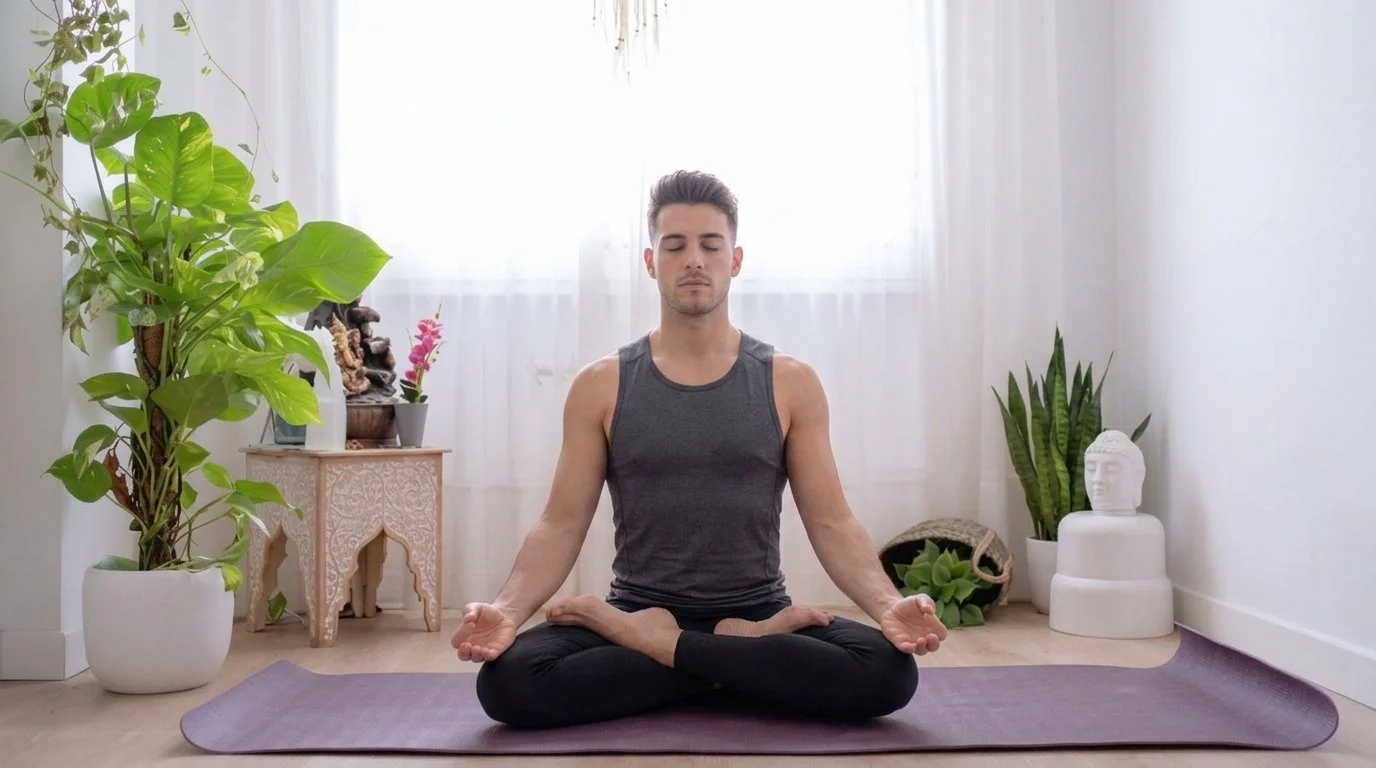
For years I described myself as "living in my head" as if it were a personality trait. I was proud of being analytical, always able to reason through emotions before they overwhelmed me. Then one Tuesday afternoon I noticed I could not tell if I was hungry. I could not decide if I wanted to eat, could not tell if the sensation in my chest was hunger or anxiety or nothing at all. That is when I realized something had gotten lost along the way. If you have found yourself similarly disconnected from your body, unable to feel signals that used to come naturally, or emotionally numb in ways that concern you, this blog post walks you through what meditation for mind body connection actually is and how to start safely.
What Body Disconnection Actually Feels Like (And Why It Happens)
Before you can rebuild something, you have to recognize what got lost. Body disconnection often develops so gradually that it becomes your baseline. You may not have realized it was happening until something surprised you into noticing. Understanding what disconnection actually feels like helps you see whether it applies to you and why it may have taken hold.
Here is what it usually looks like:
The signs most people miss until they notice them
You may find you cannot tell the difference between hunger and anxiety. You catch yourself holding tension in your shoulders for hours without noticing. You struggle to name what you are feeling when someone asks. You cannot remember the last time you felt genuinely rested even after sleeping. You watch strong emotions from a distance rather than actually feeling them. Any one of these on its own is common. Several together often signal genuine disconnection between mind and body.
How disconnection develops
Trauma is one common cause. When the body has been unsafe or overwhelming to inhabit, dissociating from bodily experience becomes a protective adaptation. But trauma is not the only path. Chronic stress teaches the nervous system to ignore signals it cannot act on. Modern life rewards cognitive performance and often punishes emotional expression. Many people learned as children to override their body signals to please adults, function in school, or navigate difficult family systems. Over years, the signals become quieter until you stop hearing them at all.
Why intellectualizing your feelings does not restore the connection
Understanding intellectually that you are disconnected from your body does not rebuild the connection. This is one of the most frustrating discoveries for analytical people who assume awareness alone should fix things. The connection is not primarily a cognitive process. It is a felt sense that has to be rebuilt through actual body experience, not through thinking about body experience.
How Meditation Actually Rebuilds Mind Body Connection
Meditation for mind body connection is not the same as meditation for stress reduction or spiritual practice, though these often overlap. The specific mechanism that rebuilds the mind-body link involves training your nervous system to notice and tolerate internal signals it has been ignoring for a long time. Understanding what actually happens in the brain and body during this kind of practice helps clarify why it works.
Here is the mechanism:
Interoception (the sense you probably do not know you have)
Interoception is your ability to perceive internal body signals. Heart rate, breath, hunger, temperature, muscle tension, and gut sensations all reach the brain through interoceptive pathways. Research shows that people with strong interoception are generally better at regulating emotions, making decisions aligned with their values, and maintaining physical health. Meditation strengthens interoception the way exercise strengthens a muscle, and this is one of the primary mechanisms by which it rebuilds mind-body connection.
The polyvagal system and vagus nerve
The vagus nerve connects your brain to most of your major organs and shapes your nervous system's shifts between activation and calm. Polyvagal theory, developed by Dr. Stephen Porges, explains how safety signals from the body activate the parasympathetic branch and allow genuine rest and connection. Meditation practices that emphasize slow breathing and gentle body awareness tone the vagus nerve, which improves emotional regulation, digestion, and the felt sense of safety in your own body.
What changes in the brain over time
Regular meditation practice produces measurable changes in the brain regions responsible for interoception and self-regulation. The insula (the primary interoceptive region) increases in gray matter density. The prefrontal cortex becomes better connected to emotional regions. The default mode network quiets. According to the National Center for Complementary and Integrative Health, these changes accumulate over months of consistent practice rather than appearing after a single session.
The Specific Meditation Practices That Rebuild Mind Body Connection
Not all meditation practices strengthen the mind-body connection equally. Some practices emphasize thought observation more than body awareness. For rebuilding disconnection specifically, certain practices consistently produce faster and more meaningful results. Knowing which techniques to prioritize helps you spend your practice time productively.
Here are the ones that work best:
Body scan meditation
Body scan involves directing gentle attention systematically through different parts of your body, noticing whatever sensations are present without trying to change them. This is one of the most direct interventions for rebuilding interoception. Ten to twenty minutes daily produces noticeable shifts within a few weeks for most people. Body scan is a foundational practice in Mindfulness-Based Stress Reduction (MBSR) and Mindfulness-Based Cognitive Therapy (MBCT) for exactly this reason.
Somatic meditation and grounding
Somatic practices go further than body scan by inviting you to feel and stay with specific sensations, particularly ones that arise around emotion. This might mean feeling the tension around a difficult thought and staying with the sensation until it shifts. Grounding practices (feeling your feet on the floor, noticing five things you can see) work similarly and are especially helpful when you feel destabilized. Somatic meditation is often taught in trauma-focused settings because it can be adjusted to feel manageable.
Breathwork and breath awareness
Slow, extended exhale breathing activates the parasympathetic nervous system and directly tones the vagus nerve. Practices as simple as a four-count inhale followed by an eight-count exhale for five minutes can shift your state noticeably. Deeper breathwork practices like coherent breathing (five breaths per minute) or box breathing (equal-length inhale, hold, exhale, hold) provide structured ways to work with the breath specifically to rebuild nervous system regulation.
Movement-based meditation
Yoga, tai chi, qigong, and walking meditation combine body awareness with movement. For people who find still meditation difficult or activating, movement-based practices often provide easier access to mind-body connection. The movement gives the mind something to track while the body experience naturally becomes more accessible. Many trauma therapists specifically recommend movement-based practices as a starting point.
How to Start Safely (Especially If You Have a Trauma History)
Meditation is generally beneficial, but it is not universally safe for every person in every situation. For people with significant trauma histories, certain meditation practices can activate rather than calm the nervous system, particularly when practiced alone without appropriate pacing. Understanding this before you start protects you from an experience that could feel like meditation "did not work" when it actually was working in a way you were not prepared for.
Here is what to know:
Why meditation can activate difficult states for some people
When body disconnection has been serving a protective function, reconnecting can bring up material the disconnection was keeping at bay. Old grief, unprocessed trauma, physical sensations linked to difficult memories, and unexpected emotional intensity can all surface during body-focused practice. This is not a sign the practice is failing. It is often a sign the practice is doing exactly what body-based work does. Preparing for it makes the process manageable rather than overwhelming.
Starting slow with grounding first
For anyone with a significant trauma history, starting with grounding practices before body scan or deeper somatic work is safer. Grounding builds the capacity to feel safe in your body first, and only then do longer or deeper practices become productive. Start with five minutes rather than twenty. Practice with your eyes open rather than closed if closed eyes feel destabilizing. Stop and re-ground if you become overwhelmed.
When to work with a therapist alongside your practice
If body-based meditation consistently activates strong distress, dissociation, or trauma responses, working with a therapist trained in trauma-informed body-based approaches becomes important. Trauma-informed therapy is specifically designed to help you rebuild body awareness at a pace your nervous system can integrate, and it addresses material meditation alone may not resolve.
When Meditation Alone Is Enough (And When You Need More)
Meditation is genuinely powerful, but it is not a replacement for professional care in every situation. Being honest about what meditation can and cannot do helps you use it well and know when to seek additional support. This is especially important because the wellness industry often oversells meditation as a solution to conditions that actually require more.
Here is the honest picture:
What meditation can do on its own
For everyday stress, general emotional flatness, mild anxiety, and building interoceptive awareness, regular meditation practice alone often produces meaningful improvement. Many people find that six months of consistent practice noticeably shifts their relationship with their body and emotions. Meditation also serves as a foundation practice that supports other work you may be doing on your wellbeing, and it pairs well with coping skills for everyday anxiety that address common patterns.
When professional support becomes important
If you have significant unresolved trauma, if body disconnection is interfering with daily functioning, if you experience dissociation regularly, or if meditation consistently activates rather than settles your nervous system, professional support becomes important. Similarly, for diagnosed anxiety disorders or other clinical conditions, meditation is a helpful supplement to treatment rather than a standalone solution.
How therapy and meditation work together
Therapy and meditation often work better together than either does alone. Therapy provides relational safety and clinical guidance for processing what surfaces. Meditation provides daily practice that consolidates the work between sessions. Many trauma therapists explicitly integrate meditation and somatic practices into their approach, and many meditation teachers now recommend therapy for anyone whose practice consistently surfaces difficult material.
Working With Massachusetts Mind Center
Massachusetts Mind Center is a Boston-area mental health practice with clinicians trained in trauma-informed and body-based approaches to therapy. If you have been feeling disconnected from your body for reasons that feel bigger than you can address through meditation alone, or if your practice has been surfacing material you would rather work through with support, we would be glad to help you figure out the right next step. Our team integrates somatic awareness with evidence-based therapy approaches for clients whose disconnection has trauma or chronic stress at its roots. Call 617-236-2193 and a real person will help you figure out whether therapy alongside your meditation practice is the right fit.
Frequently Asked Questions
How long does it take for meditation to improve mind-body connection?
Most people notice small shifts within two to four weeks of daily practice (10 to 20 minutes). More significant changes typically emerge after three to six months of consistent practice. Individual timelines vary based on baseline disconnection, trauma history, and how often you actually practice.
Can meditation help if I feel emotionally numb?
Yes, in many cases. Emotional numbing often reflects disconnection from body signals that carry emotional information. Meditation practices that emphasize gentle body awareness (body scan, somatic meditation) can gradually restore access to emotions by rebuilding the interoceptive pathways emotions depend on. For deep numbing tied to trauma, working with a therapist alongside meditation typically produces better results than either alone.
Is meditation safe if I have PTSD or trauma history?
Meditation can be safe and beneficial for people with trauma histories, but not all practices are equally safe. Body scan and somatic practices can occasionally activate trauma responses. Starting with brief, grounded practices, working with a trauma-informed teacher or therapist, and pacing your practice based on what your nervous system can integrate all make meditation safer and more effective for trauma survivors.
What is the difference between body scan and somatic meditation?
Body scan involves systematically directing attention through different body regions and noticing whatever sensations are present without trying to change them. Somatic meditation goes further by inviting you to feel and stay with specific sensations, particularly ones connected to emotional content, and to work with what arises. Body scan is often the entry point. Somatic meditation is a deeper practice that builds on body scan skills.
Should I meditate alone or use guided recordings?
For most people learning meditation for mind body connection, guided recordings work better initially. Guided practice provides pacing, cues to return attention when it wanders, and specific instructions for staying grounded. After several months of guided practice, many people begin to practice silently and find both approaches useful for different moments.