
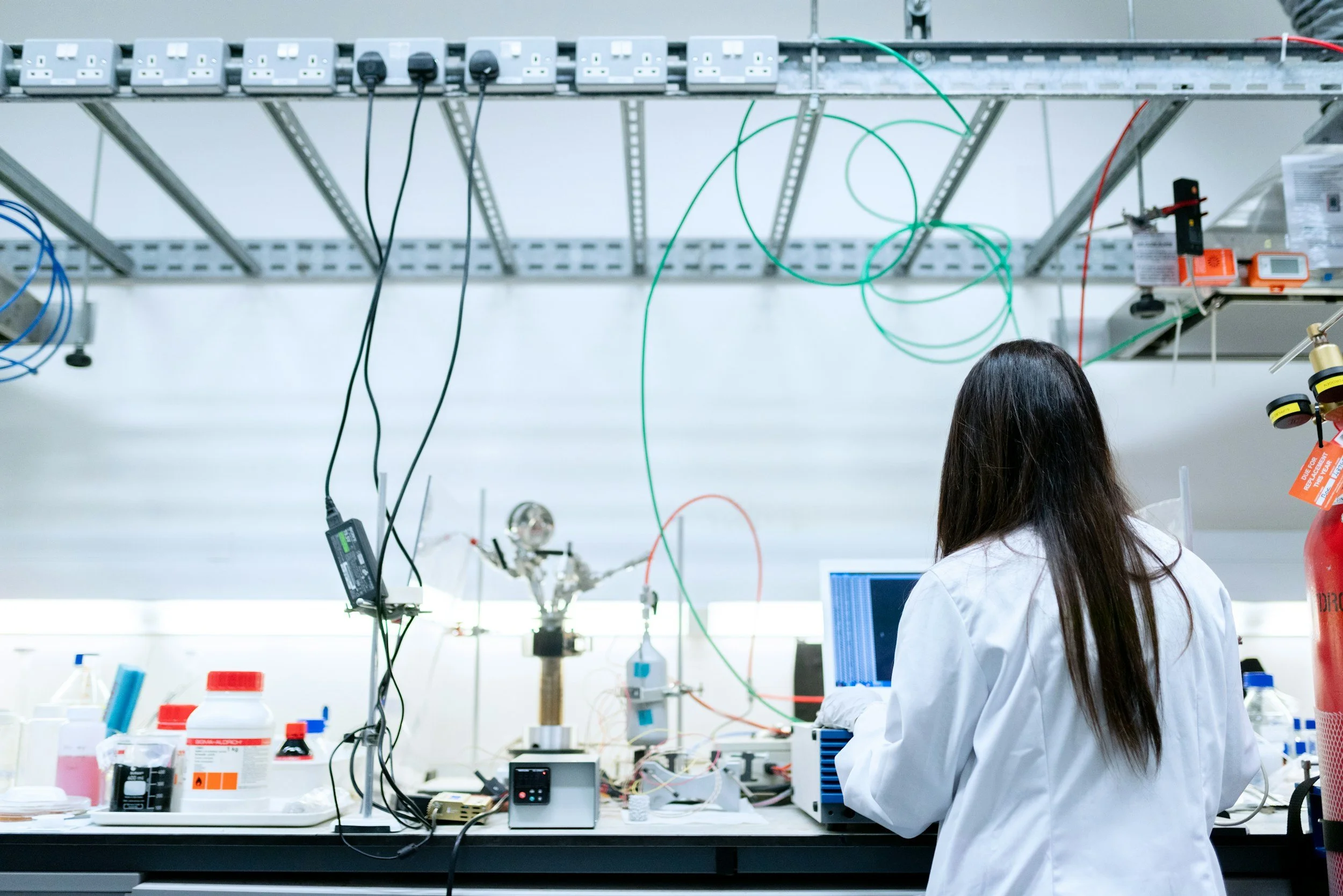
In the intricate ecosystem of clinical diagnostics, molecular biology, and biopharmaceutical manufacturing, the centrifuge remains the undisputed engine of sample preparation. These high-speed instruments execute the fundamental task of separation, isolating everything from fragile mammalian cells to dense viral vectors and microscopic nucleic acids. Yet despite their ubiquity on the benchtop, the staggering physical forces generated inside their chambers are often taken for granted by routine operators.
At tens of thousands of revolutions per minute, the internal hardware is constantly pushed to its metallurgical limits. Safeguarding daily operation requires more than careful sample balancing. It demands rigorous centrifuge maintenance, lifecycle management, and high-grade, precision-engineered hardware. Sourcing reliable, perfectly machined components from specialized equipment providers like Mr. Scientific ensures that laboratory personnel have access to the exact OEM-quality parts needed to maintain continuous, safe, and high-throughput workflows.
By treating these high-velocity systems with the strict preventative maintenance they demand, research facilities can drastically reduce the risk of catastrophic hardware failure. That protects their most valuable assets: irreplaceable samples, data integrity, and scientific staff. It also protects the people further down the line, the patients whose diagnoses and treatment decisions depend on a clean, reliable lab result.
The Physics of Separation: Understanding Extreme Stress and Metal Fatigue
To truly appreciate why meticulous centrifuge maintenance matters, you need to understand the extreme physics at play during a standard separation run. When a rotor spins, it generates Relative Centrifugal Force (RCF), commonly called G-force. In modern ultracentrifuges, this force can exceed 1,000,000 x g.
Under these immense loads, the metal of the rotor undergoes elastic deformation. It physically stretches outward as it accelerates, then contracts back toward its original shape as it decelerates. This continuous cycle of stretching and relaxing induces a phenomenon known as metal fatigue. Over thousands of cycles, microscopic changes build up within the crystalline structure of the metal.
Aluminum alloys, prized for their light weight and excellent heat dissipation, are particularly susceptible to fatigue over time. Titanium is significantly stronger and more resistant to chemical corrosion, but it is heavier and far more expensive, and it is still not entirely immune to eventual structural fatigue.
If left unchecked, microscopic stress fractures can propagate through the metal body. In a worst-case scenario, this fatigue leads to catastrophic rotor failure: an explosive event in which the kinetic energy of the spinning mass is released almost instantly. A failure of this kind can destroy the instrument, damage the surrounding laboratory, and cause severe, life-threatening injuries.
Categorizing the Hardware: Selecting the Optimal Rotor Architecture
Choosing the correct hardware for a specific assay is the first step in maximizing both separation efficiency and equipment longevity. Rotors fall into two primary architectures, each engineered for distinct fluid dynamics and payload requirements:
Fixed-Angle Rotors: The Champions of Speed and Pelleting
In a fixed-angle design, sample tubes sit rigidly in precut cavities at a specific angle (typically between 14 and 40 degrees) relative to the axis of rotation. Because they have no moving parts and are highly aerodynamic, fixed-angle rotors reach far higher speeds than swinging-bucket designs. Centrifugal force drives particles outward and downward, so they slide along the outer wall of the tube and form a tight, compact pellet at the bottom corner.
This architecture is the gold standard for rapid pelleting of bacteria, yeast, and cellular organelles, and for the precipitation of DNA and RNA. Those same nucleic acid workflows sit behind modern clinical tools such as pharmacogenetic testing for psychiatric medications, where a clean DNA sample is the starting point for every result.
Swinging-Bucket Rotors: Precision in Density Gradients
Swinging-bucket rotors consist of a central yoke with buckets attached by hinge pins. At rest, the buckets hang vertically. As the centrifuge accelerates, centrifugal force swings them out to a fully horizontal position (90 degrees), so particles travel straight down the center axis of the tube rather than striking the side walls.
This geometry is critical for density gradient centrifugation, such as separating blood into plasma, buffy coat, and erythrocytes, or isolating specific viral particles. In these protocols, a purely horizontal separation band prevents the strata from mixing during deceleration.
Core Pillars of a Comprehensive Centrifuge Safety and Maintenance Protocol
Preventing hardware failure means shifting the lab's mindset from reactive repairs to proactive, scheduled maintenance. High-throughput facilities should implement strict Standard Operating Procedures (SOPs) that govern the daily, weekly, and annual care of their centrifugation equipment. A robust preventative maintenance checklist should mandate the following protocols:
• Precision gravimetric balancing. Symmetrical loading by volume is not enough for high-speed runs. Opposing samples, including tubes, caps, and adapters, must be balanced by weight on a precision scale, often to within 0.1 g for ultracentrifuges. Minor imbalances cause excess vibration that permanently damages the drive shaft and motor bearings over time.
• Visual micro-crack inspections. Before every run, operators should inspect the hardware for wear, especially at the bottom of tube cavities, around bucket hinges, and along the spindle interface. Any scoring, pitting, or discoloration is a red flag that needs immediate engineering review.
• O-ring and thread lubrication. The vacuum seals and threaded parts of biocontainment lids need regular application of manufacturer-approved vacuum grease. Dry O-rings crack and compromise aerosol containment, while unlubricated threads gall and can seize under high gravitational loads.
• Mandatory run logging. Labs operating under Good Laboratory Practice (GLP) standards must keep meticulous logs of every rotor's usage, tracking total runs, maximum speeds used, and cycle durations. These logs are also what make accurate derating and retirement decisions possible later.
The Silent Threat: Corrosion and Chemical Degradation
Mechanical stress is inevitable, but chemical corrosion is the most common preventable cause of rotor degradation. Most aluminum hardware is protected by a thin, electrochemically applied anodized layer that stops the underlying metal from reacting with its environment.
Unfortunately, labs are full of corrosive agents. Accidental spills of strong acids, alkaline buffers, or concentrated halide salts (such as the cesium chloride used in gradient separations) can quickly eat through the anodized coating. Once raw aluminum is exposed, pitting corrosion accelerates, creating microscopic pits that act as starting points for stress fractures during high-speed rotation.
To prevent this, neutralize and clean any spill immediately. Routine cleaning should use only mild, pH-neutral detergents and soft, non-abrasive cloths. Never use stiff bristle brushes or abrasive scouring pads, because they scratch the anodized surface. Store rotors upside down in a clean, dry place so that residual moisture drains completely from the tube cavities.
Managing the Lifecycle: Derating and Equipment Retirement
No piece of laboratory hardware lasts forever. Managing a rotor's lifecycle means knowing when to "derate" the equipment and when to enforce mandatory retirement.
Derating is a safety practice in which the maximum allowable speed of an aging rotor is permanently reduced to lower the physical stress it experiences. This extends its functional, though slower, lifespan. Manufacturers typically provide strict derating formulas based on the total number of runs or the age of the equipment.
Many modern rotors have a defined operational lifespan, often 10,000 cycles or 10 years of service, whichever comes first. Always confirm the exact figure in your rotor's manual. Even if a decade-old rotor looks pristine to the naked eye, internal crystalline fatigue is invisible and highly dangerous. Following these retirement schedules is a non-negotiable part of laboratory safety and risk management.
Biohazard Containment and Aerosol Safety Protocols
Beyond the physical danger of mechanical failure, centrifuges present a unique biological hazard: infectious aerosols. When processing pathogens, clinical blood samples, or hazardous viral vectors, a leaking or broken tube can atomize the sample into a fine, invisible mist inside the chamber.
If the hardware is not properly sealed, opening the lid can release these aerosols directly into the technician's breathing zone. To prevent this, process infectious materials only in rotors or buckets fitted with certified aerosol-tight biocontainment lids with intact, properly seated O-rings. Load and unload these sealed buckets inside the controlled airflow of a Class II Biological Safety Cabinet (BSC). That way, any internal leakage is contained and decontaminated before the hardware returns to the open bench.
Why Lab Precision Matters Beyond the Bench: From DNA Extraction to Personalized Mental Health Care
A well-maintained centrifuge does not only protect a lab. It protects every patient whose care depends on that lab's results. Pharmacogenetic testing is a clear example, because a psychiatric treatment decision can rest on how cleanly a DNA sample was processed. The path from sample to prescription looks like this:
How a Genetic Test Travels From Sample to Prescription
1. Sample collection. The clinic collects a small biological sample from the patient and sends it to a specialized testing laboratory.
2. DNA extraction. The lab isolates the patient's DNA. Most extraction workflows include one or more centrifugation steps to separate cellular debris and pellet or purify nucleic acids.
3. Genotyping. The purified DNA is analyzed for variants in genes that affect how the body processes medications, such as the Cytochrome P450 (CYP450) enzymes.
4. Clinical report. The lab sends results back to the prescriber, flagging medications that may be harder to metabolize or more likely to cause side effects.
5. Treatment decision. The clinician combines the report with the patient's history and symptoms to choose a medication and dose.
If a rotor fails, a seal leaks, or an imbalance corrupts a run at step 2, the patient may face a repeat sample and a delayed result. For someone waiting to start or switch a psychiatric medication, that delay is not abstract.
What This Means for Patients at Mass Mind Center
Massachusetts Mind Center, an outpatient mental health clinic in Boston, partners with GeneSight to offer psychotropic medication genetic testing. According to the clinic, CYP450 enzymes handle about 70% of medication metabolism, and gene variations can change how quickly a person processes certain drugs.
Those results feed directly into the clinic's psychiatric medication management services, where prescribers use them to reduce trial-and-error prescribing. The lab equipment behind each report is invisible to the patient, but its reliability shapes how quickly and confidently their care can move forward.
The Human Side of High-Stakes Lab Work
Every protocol in this guide depends on a person who is focused, rested, and steady enough to follow it. Gravimetric balancing, pre-run inspections, and run logs all fail quietly when the operator is exhausted or overwhelmed. Here is why the wellbeing of lab staff belongs in any serious safety plan:
Stress and Burnout Are Common in Research Environments
Research culture often runs on long hours and constant pressure. In Nature's 2019 survey of more than 6,300 PhD students worldwide, 36% of respondents said they had sought help for anxiety or depression caused by their studies, and just under half reported a long-hours culture at their university. Chronic stress affects sleep, concentration, and decision-making, which are the exact capacities that safe centrifuge operation relies on.
Attention to Detail Is a Safety Skill
Missing a hairline crack or misreading a balance by a fraction of a gram can have serious consequences in a lab. People who struggle with focus are often hardest on themselves in detail-heavy roles. If that sounds familiar, it is worth reading what the research shows about ADHD and attention to detail, because the picture is more nuanced than most people assume.
Practical Support for Lab Teams
Lab managers can build wellbeing into operations the same way they build in maintenance. Realistic scheduling, clear SOPs, and a culture where people can report near-misses without blame all reduce error. Skills from approaches such as mindfulness in DBT therapy can also help staff stay present during repetitive, high-precision tasks. For researchers and lab professionals in the Boston area dealing with anxiety, depression, or burnout, individual therapy services at Massachusetts Mind Center offer a confidential place to get support.
Frequently Asked Questions
How often should a centrifuge rotor be inspected?
Inspect the rotor visually before every run, focusing on tube cavities, bucket hinges, and the spindle interface. Schedule a deeper professional inspection at the interval set in the manufacturer's manual, typically at least once a year.
What is the difference between a fixed-angle and a swinging-bucket rotor?
A fixed-angle rotor holds tubes at a set angle and is best for fast pelleting of cells and nucleic acids. A swinging-bucket rotor swings tubes to horizontal and is best for density gradient work, such as separating blood components.
When should a centrifuge rotor be retired?
Retire a rotor when it reaches the manufacturer's cycle or age limit, often 10,000 cycles or 10 years, or sooner if you find cracks, pitting, or corrosion. Derating can extend use within that window at a lower maximum speed.
How does lab equipment quality affect genetic testing for mental health medications?
Pharmacogenetic tests start with DNA extraction, which commonly involves centrifugation. Reliable, well-maintained equipment helps the lab deliver accurate results on time, so prescribers can make medication decisions with less trial and error.
Precision, Safety, and the People Behind Every Result
In the highly regulated landscape of modern scientific research, precision and safety are inseparable. The centrifuge is not merely a tool for separation. It is a high-performance engine that demands respect, continuous auditing, and expert care.
By understanding the physics of metal fatigue, implementing rigorous cleaning and balancing protocols, and replacing critical components through trusted, specialized suppliers before they fail, lab managers can safeguard their personnel and keep their facility at peak analytical efficiency. View maintenance not as an operational delay, but as the foundational investment that guarantees the integrity of every discovery and every patient result that follows.
If you are a researcher or lab professional feeling the weight of high-pressure work, or a patient curious whether genetic testing could guide your medication, contact Massachusetts Mind Center at (617) 236-2193 to talk with the team.